If your tap water comes from a municipal source, you’ve likely got chloramines in your tap water. Chloramines are common in municipal water systems across America— in some places, they’re used as the primary disinfectant agent instead of free chlorine. Chloramines are used to treat drinking water and keep it safe for consumption, but they can also cause a strong chlorine smell. Fortunately, there are ways to remove chloramines from your water before drinking or cooking. Let’s look at what chloramines are if they are safe, and how to remove them.
What are chloramines?
Chloramines are a combination of chlorine and ammonia, which are used to disinfect water. Chloramine is more stable than chlorine, so it’s better at killing bacteria and viruses. It can also be used at lower concentrations than free chlorine—a big plus for municipalities looking to save money on their water treatment bills.
Chloramines are a chemical used to kill pathogens in water. They’re also called disinfectants and can be added to water because they’re more effective than chlorine alone. The problem with chloramine is that it’s less effective at killing bacteria than chlorine, so if you have an older municipal water supply, your tap water may contain chloramines.
Chloramines are formed when ammonia mixes with chlorine or other disinfectants like bromine or ozone. The city of Indianapolis uses chloramines to disinfect its water supply. The same goes for Bloomington, Fishers, Carmel, and Westfield—all Central Indiana cities that rely on the public water system.
Are chloramines safe for my family to drink?
The short answer is yes—in small quantities. There are two types of chloramine: monochloramine (NH2Cl) and dichloramine (NCl2). The levels of these compounds in drinking water vary depending on the local water supplier and the disinfection method used. The (EPA recommends that monochloramine levels not exceed 0.5mg/L over 24 hours or 1mg/L over seven days, and Dichloramines should not exceed 0.2mg/L over 24 hours or 0.5mg/L over seven days.
The long answer depends on your health status and the amount of chloramine in your water.
Chloramine can cause problems for people with certain health conditions, such as asthma or allergies. It can also cause problems for some people who have compromised immune systems or who have been treated with medicines that suppress their immune system (immunosuppressive drugs).
 Also, a new study shows. Chloramines can cause cancer, asthma and other respiratory problems, liver damage, kidney damage, and birth defects. Chloramines have also been linked to reproductive problems in both men and women.
If you receive municipal water treated with chlorine or chloramines, toxic disinfection byproducts (DBPs) form when these disinfectants react with natural organic matter like decaying vegetation in the source water. DBPs are over 1,000 times more toxic than chlorine, and out of all the other toxins and contaminants in your water, such as fluoride and miscellaneous pharmaceutical drugs, DBPs are likely the absolute worst.
Also, it’s known that trihalomethanes (THMs), one of the most common DBPs, are Cancer Group B carcinogens, meaning they’ve been shown to cause cancer in laboratory animals. They’ve also been linked to reproductive problems in animals and humans, such as spontaneous abortion, stillbirths, and congenital malformations, even at lower levels. These types of DBPs can also:
- Weaken your immune system
- Disrupt your central nervous system
- Damage your cardiovascular system
- Disrupt your renal system
- Cause respiratory problems
One of the benefits often touted about chloramines is that they produce lower levels of regulated DBPs, such as THMs, than chlorine, and they still make them, just at lower levels.
In 1998, the U.S. Environmental Protection Agency (EPA) published its Stage 1 Disinfection Byproducts Rule, which required water treatment systems to reduce the formation of DBPs. This has led to increasing treatment plants switching from chlorine to chloramine.
Many believe this makes chloramine the superior choice in terms of safety, but what is less publicized is that compared to chlorine, water treated with monochloramine (the most common form of chloramine used to disinfect drinking water) may contain higher concentrations of unregulated disinfection byproducts—the risks of which are unknown.
How do I remove chloramines from my water?
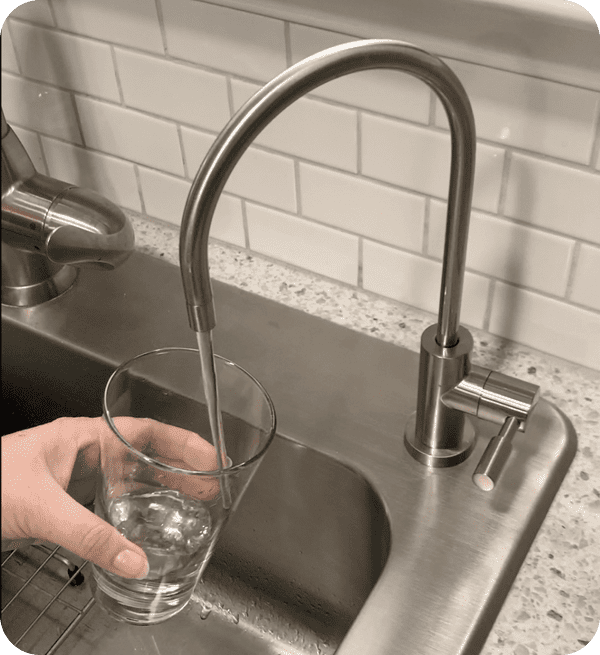
A carbon filter is the best way to remove chloramines from your tap water. If you want to go the extra mile, you can also use a reverse osmosis system.
While you can always remove chlorine from drinking water by boiling it or leaving it in the refrigerator for 24 hours, these methods can take time and may be inconvenient. On the other hand, alternatives like UV light exist, but they are less accessible and can be expensive. If you need dechlorinated water immediately and affordably, you’ll need to follow another method.
The best way to remove chlorine from drinking water is to use a dechlorinator. These appliances are created to remove chlorine from water treated with chlorine, and dechlorinators are the most reliable and consistent way to remove chlorine from municipal water. Though various methods remove chlorine and chloramines from drinking water, a dechlorinator is the most consistent. Dechlorinators are designed specifically to remove not only chlorine but chloramines from water. This is important because, while chlorine naturally evaporates from water, chloramines do not.
The c and j dechlorinator uses catalytic carbon to remove chlorine and chloramines. The municipal source feeds water into the dechlorinator, which removes the chlorine and chloramines using a catalytic carbon filter. Next, it is passed on to a water softener before reaching your tap.
A dechlorinator is combined with a water softener to remove chlorine, chloramines, and other contaminants. This way, your water is safer, more palatable, and more pleasant to drink.
We hope this article has helped you understand the difference between chlorine and chloramines. Chlorine is a chemical used to disinfect water, and it can cause health problems when ingested at high levels. Chloramines are formed when chlorine meets ammonia in tap water—and they’re nearly impossible to remove without a filtration system. If your city uses chloramines, we recommend using a reverse osmosis (RO) system or activated carbon filter with a pre-filter attachment that removes any impurities before they reach the main filter media layer.
Chlorine and chloramine are added to drinking water to combat viruses, germs, and other dangerous contaminants that can get into our water supply. If you don’t like the taste or smell of chlorine in your drinking water, or if you’re concerned about the potential harm to your health that chlorine could cause, it is a good idea to remove chlorine from your drinking water.
Thankfully, it is easier than it seems to remove chlorine from drinking water. By purchasing a dechlorinator like those offered by c and j Water, you can consistently and effortlessly improve the taste of your tap water while forgetting about any of your health concerns associated with chlorine and chloramines.