You Don't Need Better
Lotion
Soap
Detergent
Shampoo
Plant Food
Dish Soap
Makeup
Cleaners
You Need Better
Water
Why Test for Lead and Heavy Metals?
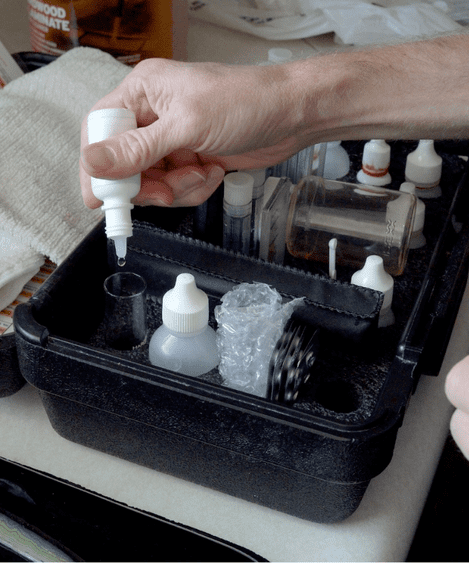
Lead and heavy metals in water are invisible, tasteless, and odorless. Clear water is not proof of safe water. C and J Water provides professional lead and metal testing to accurately identify contaminants and determine whether treatment is required.
Lead and other metals can enter water from multiple sources: — Aging plumbing, solder, or fixtures — Private well geology — Corrosion in municipal distribution systems — Improperly balanced water chemistry — Even low concentrations can be a concern over the long term. Testing is the only way to know.
Metals We Commonly Test For Our professional testing can identify the presence and concentration of: — Lead — Arsenic — Iron — Manganese — Copper — Chromium — Nickel — Zinc — Other regulated and nuisance metals Results are measured against EPA and health-based benchmarks, not assumptions.
Who Should Test Their Water?
Lead and metals testing is recommended if you: *Use a private well *Live in a home built before 1986 *Have older plumbing or unknown pipe materials *Are you experiencing staining, metallic taste, or discoloration *Have children, pregnant occupants, or health concerns *Want confirmation before installing filtration
Lead Testing for Well Water and City Water
Lead issues are not limited to one water source type. Well water: Metals often originate from natural geology City water: Lead typically comes from service lines, solder, or household plumbing We test both and clearly explain the difference.
If elevated levels are detected, C and J Water provides data-driven treatment options, which may include: Reverse Osmosis (RO) for drinking and cooking water Whole-house metal filtration systems Point-of-use lead reduction filters Water chemistry correction to reduce corrosion and leaching If no action is needed, we will tell you.
You Don't Need Better
Lotion
Soap
Detergent
Shampoo
Plant Food
Dish Soap
Makeup
Cleaners
You Need Better
Better
Bigger
Faster
Frequently Asked Questions
How do I know if there is lead in my water?
You cannot see, taste, or smell lead in water. The only reliable way to know is through professional water testing that measures lead concentration against health-based standards.
Is lead only a problem in older homes?
No. Older homes are at higher risk due to legacy plumbing and solder, but lead can be present in newer homes through fixtures, service lines, or water chemistry that causes corrosion.
Can lead be present in well water?
Yes. Lead can occur naturally in groundwater due to local geology or enter through well components and household plumbing. Private wells are not regulated, so testing is the homeowner’s responsibility.
Can municipal (city) water contain lead?
Yes. Lead typically enters city water after it leaves the treatment plant, usually from lead service lines, solder, or interior plumbing. Municipal treatment does not guarantee lead-free water at the tap.
What level of lead in water is considered unsafe?
The EPA action level for lead in drinking water is 15 parts per billion (ppb). Many health organizations recommend action at lower levels, especially in homes with children or pregnant occupants.
What other metals should I test for?
In addition to lead, common metals of concern include arsenic, iron, manganese, copper, chromium, and nickel. Testing should be based on the water source, plumbing materials, and local conditions.
Are store-bought lead test kits accurate?
Most DIY test kits are screening tools only. They lack the precision needed to quantify lead levels reliably and cannot evaluate multiple metals or guide treatment decisions.
What is the best way to remove lead from drinking water?
Effective options include reverse osmosis (RO) systems for drinking water and whole-house filtration systems designed for lead and heavy metals. The correct solution depends on test results.
Do I need whole-house filtration or just point-of-use treatment?
That depends on where lead is present and how the water is used. Point-of-use systems protect drinking water, while whole-house systems reduce lead exposure throughout the home. Testing determines the correct approach.
How often should lead and metals testing be done?
Testing is recommended: When purchasing a home After plumbing changes or well work If water chemistry changes Every few years, for private well owners
Will C and J Water recommend treatment even if it’s not needed?
No. C and J Water follows a testing-first approach. If results do not indicate a problem, no treatment is recommended.
How long does testing take?
Sample collection is typically completed during a single visit. Results are usually available within a few days, depending on the scope of testing.