A common thought for homeowners is that a softener is the ultimate solution for better water. While it certainly will make an improvement, it can only solve part of the potential problems with your home’s water. C and J Water has helped thousands of Central Indiana families and we’ve found that pairing a softener and reverse osmosis is a great way to safeguard your plumbing, appliances, and your health. We’ll explain the difference between those systems and why they go together so well.
What Exactly Do Water Softeners and RO Systems Do?
A softener solves one of the biggest problems with city water. But it does not get rid of most of the contaminants that affect health, taste, or odor.
Water Softener: The Protector of Your Home
A softener addresses water hardness, which is the presence of dissolved minerals—primarily calcium and magnesium. The more dissolved minerals the water has, the harder it becomes. Our technicians frequently measure hardness levels from 12 to 20 grains per gallon (gpg) in this area. That is some of the hardest water in the nation, 3-5 times what would be considered a moderate amount. Hard water causes a chalky buildup in your plumbing fixtures or appliances. Other signs include dishes with residue on them, or your water tastes strange or different.
- What it Doesn’t Fix: A softener does not remove contaminants like bacteria, pesticides, lead, chlorine, or forever chemicals.
- How it Works: A softener replaces the hard mineral ions in your water by exchanging them for softer sodium or potassium ions.
- What it Fixes: Scale buildup on pipes and heating elements (extending appliance life), soap scum residue, spotty dishes, and often dry skin and dull hair.
Reverse Osmosis (RO): The Purifier of Your Drinking Water
Reverse Osmosis filtering is a process that aims at removing dissolved solid particles from the water. The RO system removes many dissolved solids that a water softener alone cannot. This process makes the water much safer and more suitable for drinking and cooking. It eliminates odors, bad tastes, and color and helps promote a longer lifespan for your water-using appliances.
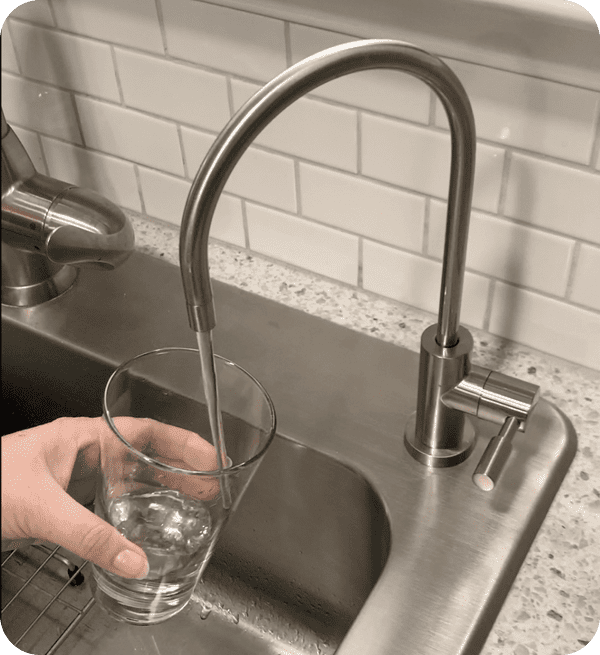
- How it Works: Water is forced through four filters, including a semipermeable RO membrane that contains microscopic pores. The membrane traps anything larger than a water molecule.
- What it Fixes: Removes up to 99% of Total Dissolved Solids (TDS), including metals like lead, arsenic, copper, and aluminum, as well as inorganic forms like nitrates, chlorides, and sulfates. It also removes emerging contaminants like PFAS (‘forever chemicals’), PFOAs, and VOCs. These are becoming more common in our water and stick around in the environment and our bodies.
- What it Doesn’t Fix: Filtering the whole home. An RO system is usually installed only at the kitchen faucet, maybe including an ice maker. It doesn’t usually filter the entire home’s supply.
The Four Stages of Pure Drinking Water
Our premium Reverse Osmosis systems are built on a four-stage process to ensure the highest quality drinking water:
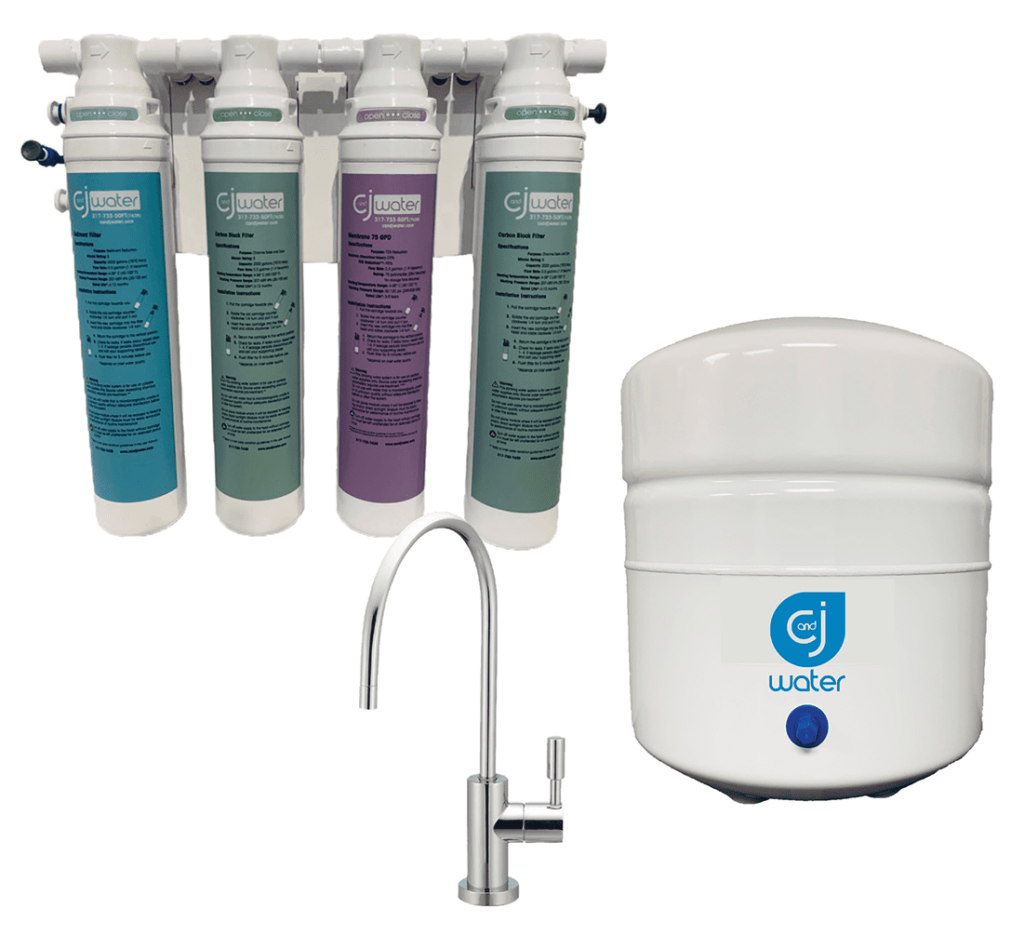
- Sediment Filter: Screens out material such as dirt, sand, or rust, which may clog the other filters in the system.
- Activated Carbon Block Prefilter: Reduces chlorine, which may damage the RO membrane filter. It also reduces elements that cause water to taste and smell unpleasant, including chlorine taste and odor.
- RO Membrane: Removes dissolved solids and non-water molecules.
- Activated Carbon Block Polishing Filter: Absorbs any residual tastes & odors just before the water is delivered to a holding tank and then a faucet.
Why the Two Systems Work Best Together
For the highest-quality water and the lowest maintenance cost, a softener and RO system are the essential duo.
A Softener Extends the RO System’s Lifespan
The biggest threat to an RO system is hard water scale. The calcium and magnesium in hard water will quickly clog and damage the delicate RO membrane, rendering the system inefficient or useless within a year.
- Protection: The water softener removes the hardness minerals before the water reaches the RO membrane.
- Benefit: The RO membrane can last up to five years with pre-softened water, significantly reducing your long-term maintenance costs.
Maintaining Your Systems and Long-Term Value
Investing in a paired system is an investment in your home’s infrastructure. Proper maintenance ensures the longest lifespan and best performance.
| System | Recommended Maintenance | Service Life Expectancy |
| Water Softener | Check and refill the salt/brine tank monthly; periodically clean the tank. | Varies by system (often 10–20 years). |
| RO Pre/Post Filters | Change sediment and carbon filters annually. | 1 year |
| RO Membrane | Change every 3–5 years. (With soft water pre-treatment, this can be extended significantly) | 3–5 years |
Ready to Solve Your Water Quality Problems?
C and J Water can help with solutions to protect your home investment and give you a great experience. With WQA Certification and decades of experience serving the Central Indiana area, C and J Water is uniquely qualified to diagnose and treat any hard water and contamination issues.
Contact us today to schedule your free analysis and discover the right system for your home.